


The Zen Rock Garden at Dharma Bum Temple
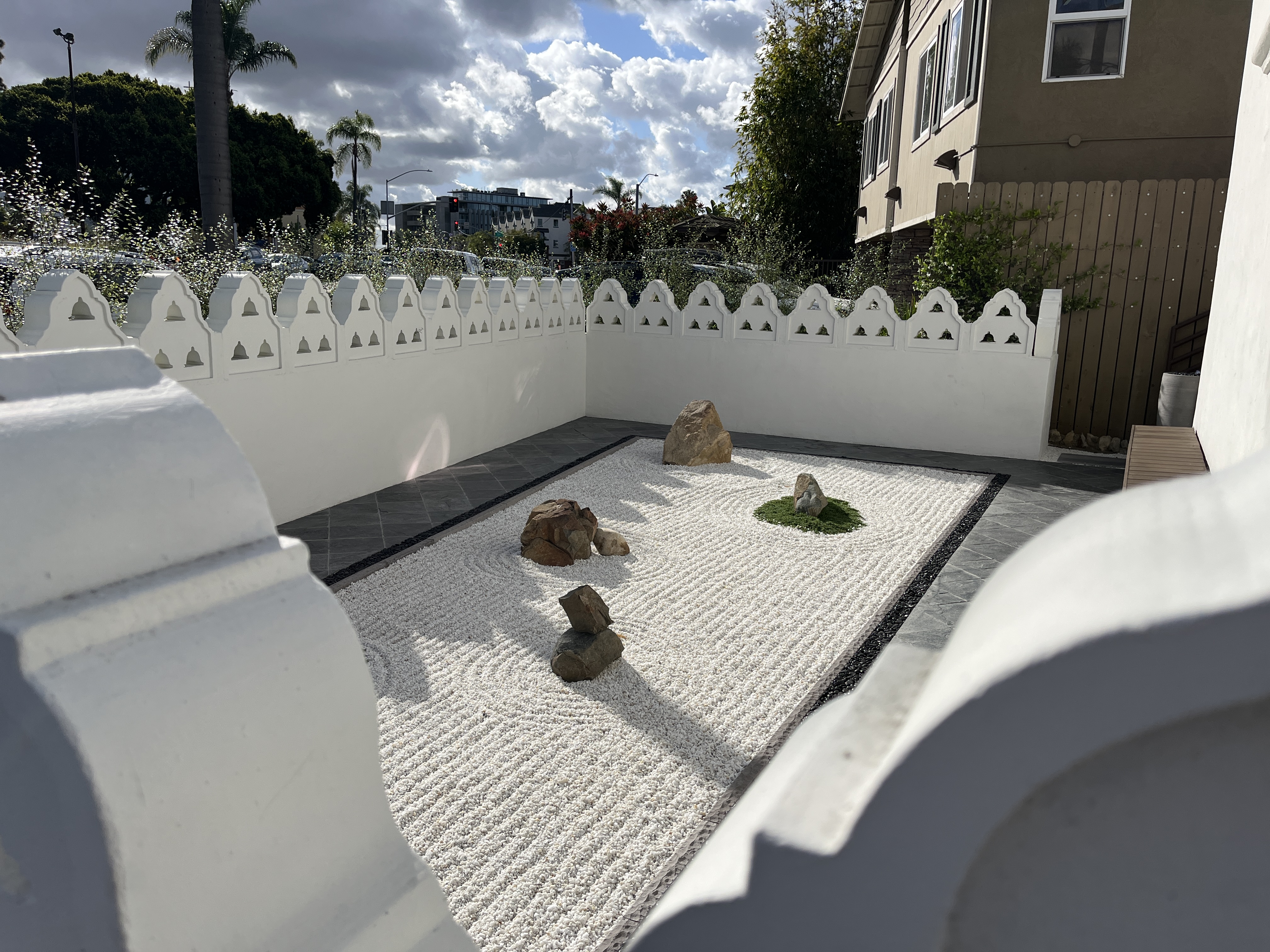
The Dharma Bum Temple Zen Rock Garden was created as a place for quiet meditation and contemplation. Traditional Zen gardens, known as karesansui or “dry landscape gardens,” use carefully placed rocks, gravel, and open space to evoke mountains, islands, rivers, and the vastness of nature without the use of water. Rather than presenting a fixed meaning, these gardens invite each visitor to experience them personally and directly.
History of the Garden
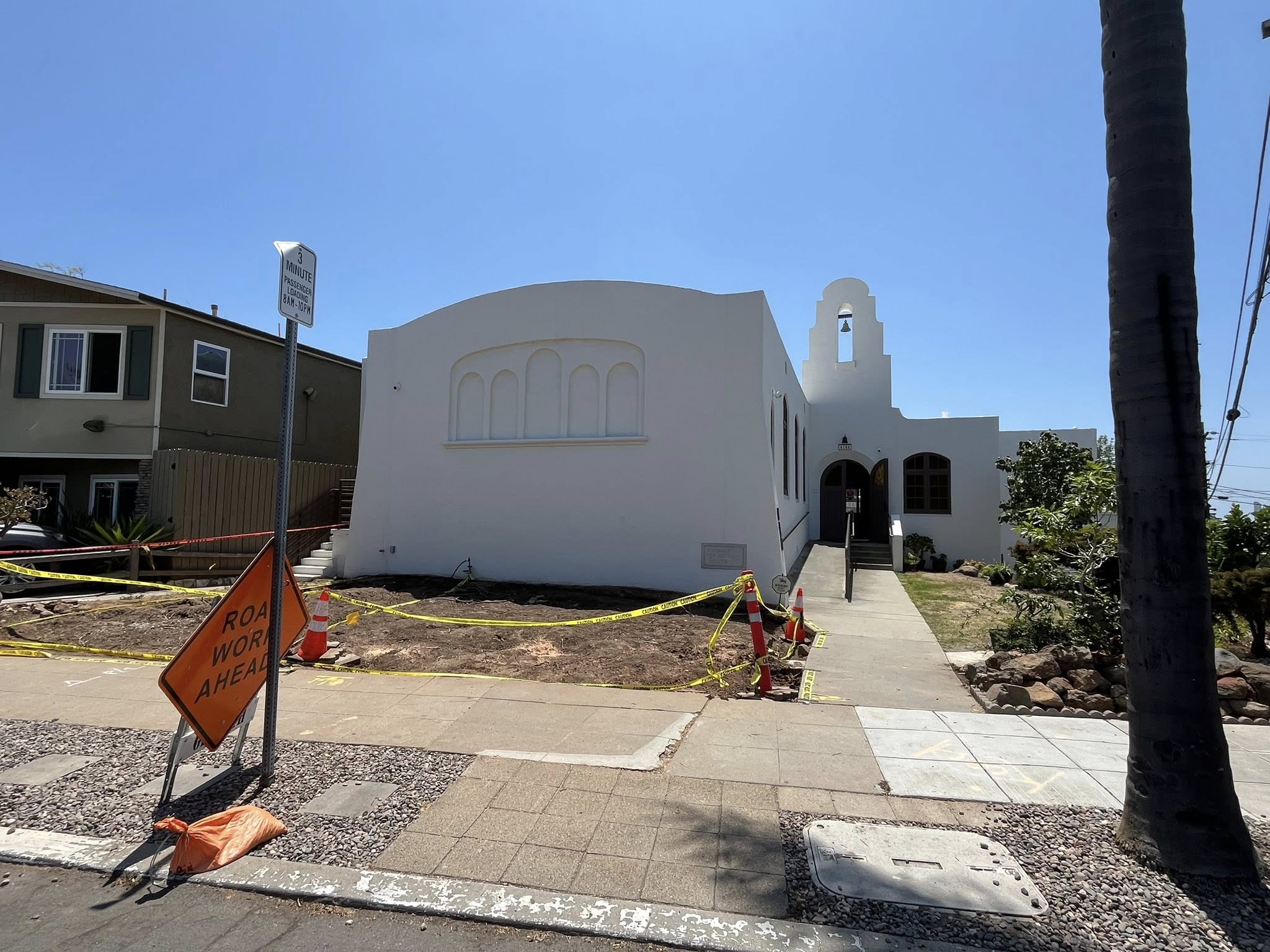
When the co-founders of Dharma Bum Temple first walked onto the property in 2016, they immediately recognized the outdoor space as the perfect location for a future Zen garden. At the time, the community’s energy and resources were focused on preserving and restoring the historic building itself. After successfully purchasing the property and spending eight years repairing, restoring, and revitalizing the interior spaces, the Temple was finally ready to turn its attention outdoors.
Construction of the Zen Garden began in July 2025 and was completed in September 2025 through the efforts of dedicated volunteers, donors, and community members. What was once an underutilized outdoor area was transformed into a peaceful sanctuary designed to support meditation, contemplation, and mindful presence for generations to come.
Inspired by the spirit of the famous Zen Garden Ryōan-ji, in Kyoto, Japan, the garden was created not merely as a landscape feature, but as a living expression of Buddhist practice and a place where visitors can encounter stillness, beauty, and simplicity in the midst of everyday life.
Meaning and Symbolism
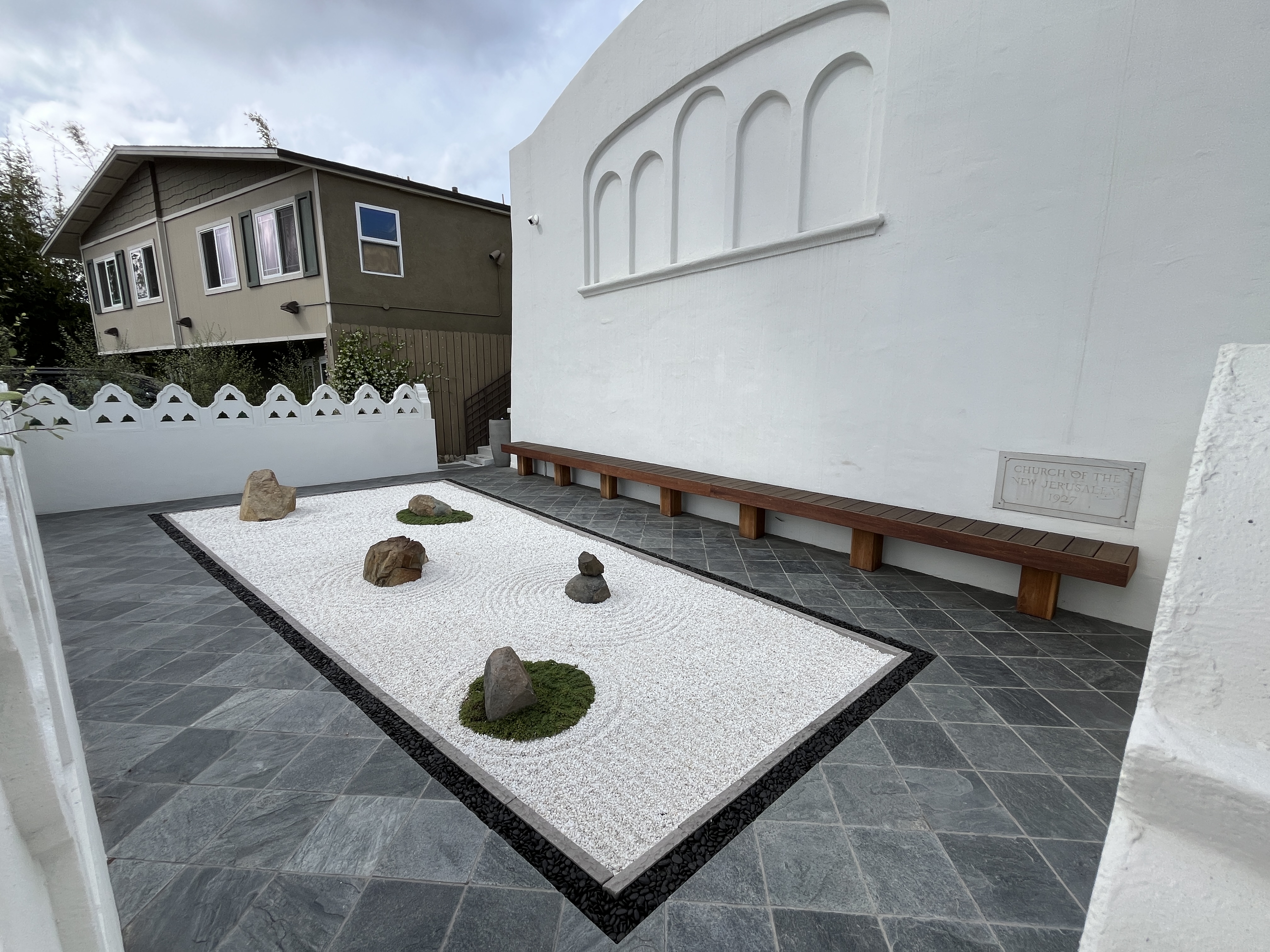
Like many traditional Zen gardens, the Dharma Bum Temple Zen Garden uses simple natural elements to express profound spiritual teachings.
The raked gravel symbolizes both water and impermanence. Just as water is constantly flowing and changing, the carefully raked patterns are temporary and must continually be renewed. Wind, rain, footsteps, and time eventually erase every design, reminding us that all things arise, change, and pass away. Each raking becomes an opportunity to begin again with mindfulness and care.
The garden’s boulders represent equanimity, stability, and inner strength. While the world around them changes, the stones remain grounded and undisturbed. They remind us of the Buddhist practice of maintaining balance amidst life’s joys and sorrows, successes and failures, praise, and criticism. Like the stones, we can learn to remain steady and present regardless of external circumstances.
The moss represents patience and trust in the natural unfolding of life. Moss grows slowly, quietly, and without force. It teaches us that meaningful growth cannot be rushed and that wisdom, compassion, and spiritual practice develop over time. Just as the moss gradually spreads across the landscape, our practice deepens through consistent care, attention, and perseverance.
Together, the gravel, stones, and moss create a living teaching on impermanence, equanimity, and patience. They invite visitors to slow down, observe deeply, and reflect on how these qualities can be cultivated in their own lives. Like the garden itself, Zen practice is not about achieving perfection, but about returning again and again to the present moment with awareness, compassion, and an open heart.
Guidance for Visitors
We invite visitors to approach the garden with reverence and mindfulness. This is a place for contemplation or possible quiet conversation while not disturbing others, rather than a place for recreation. As you sit with the garden, allow yourself to slow down, breathe deeply, and simply observe.
There is no correct interpretation and nothing to solve. The purpose of the garden is not to analyze or explain, but to cultivate direct experience. In the spirit of Zen practice, visitors are encouraged to let go of concepts, judgments, and expectations and simply rest in awareness. Through quiet observation, the garden becomes a mirror reflecting the state of our own minds.
Each visit offers an opportunity to reconnect with the present moment, to appreciate simplicity, and to remember that wisdom often arises not from thinking more, but from seeing clearly. The Zen Garden is open Monday thru Friday from 8am-7pm and Saturday/Sunday 8am-5pm.
Zen Garden Training
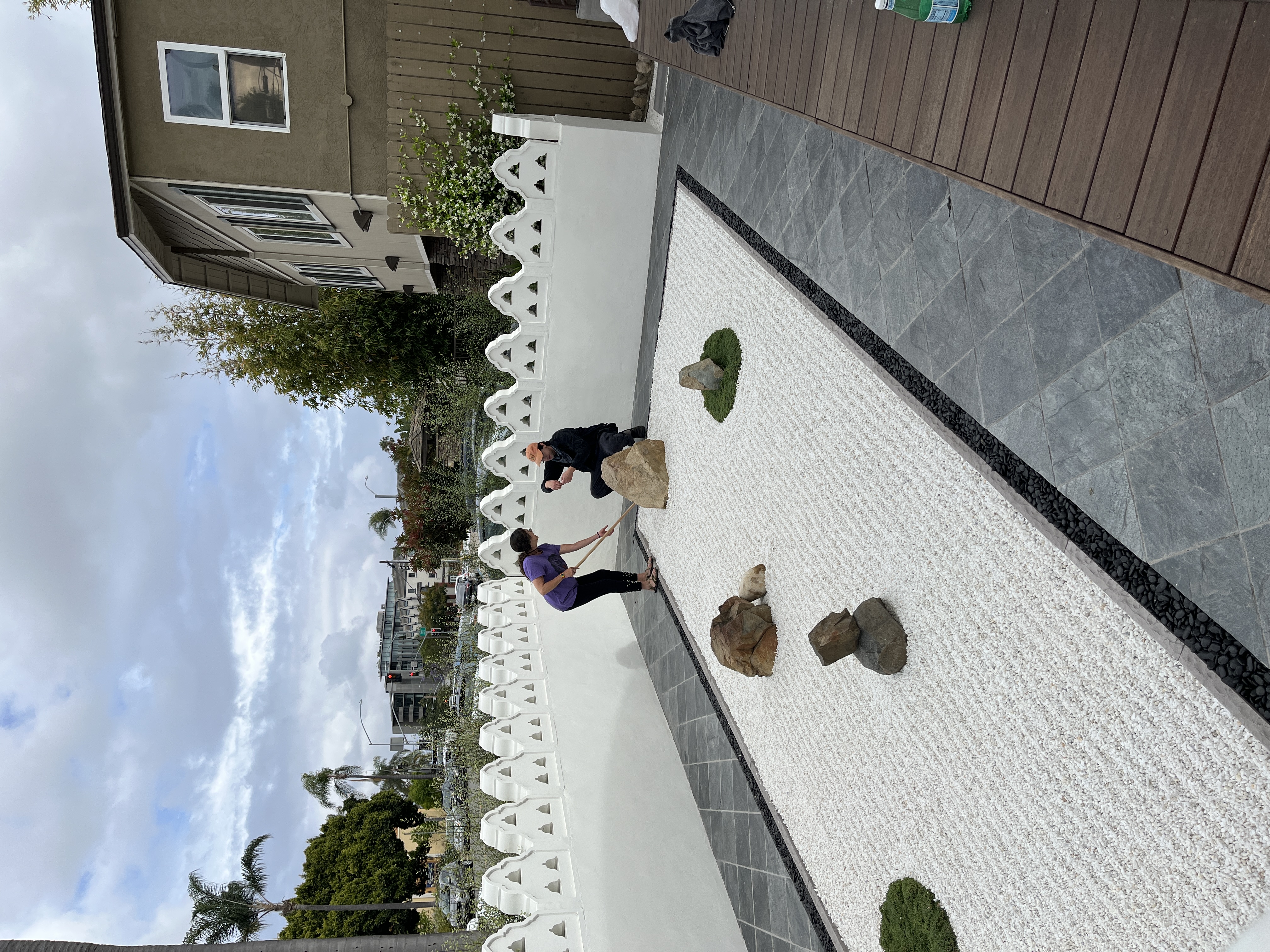
If you feel inspired to deepen your connection with the garden, Dharma Bum Temple offers free Zen Garden raking trainings every Saturday at 3:00 PM. Space is limited and RSVP is required. Participants learn the history and symbolism of traditional Zen gardens, proper raking techniques, and how garden care can become a form of mindfulness and meditation practice.
Raking the garden is considered an act of service, concentration, and contemplation rather than simply maintenance. The repetitive movements of the rake become a meditation in themselves, cultivating presence, patience, and diligence. Through this practice, participants learn to care not only for the garden, but also for their own minds.
Those interested in attending a training session are invited to email admin@dharmabumtemple.org to register and receive additional information.
May this garden serve as a refuge for reflection, a reminder of the beauty of simplicity, and an invitation to encounter each moment with greater awareness, wisdom, compassion, and peace.
Click here to view photo album of the creation of the Zen Rock Garden
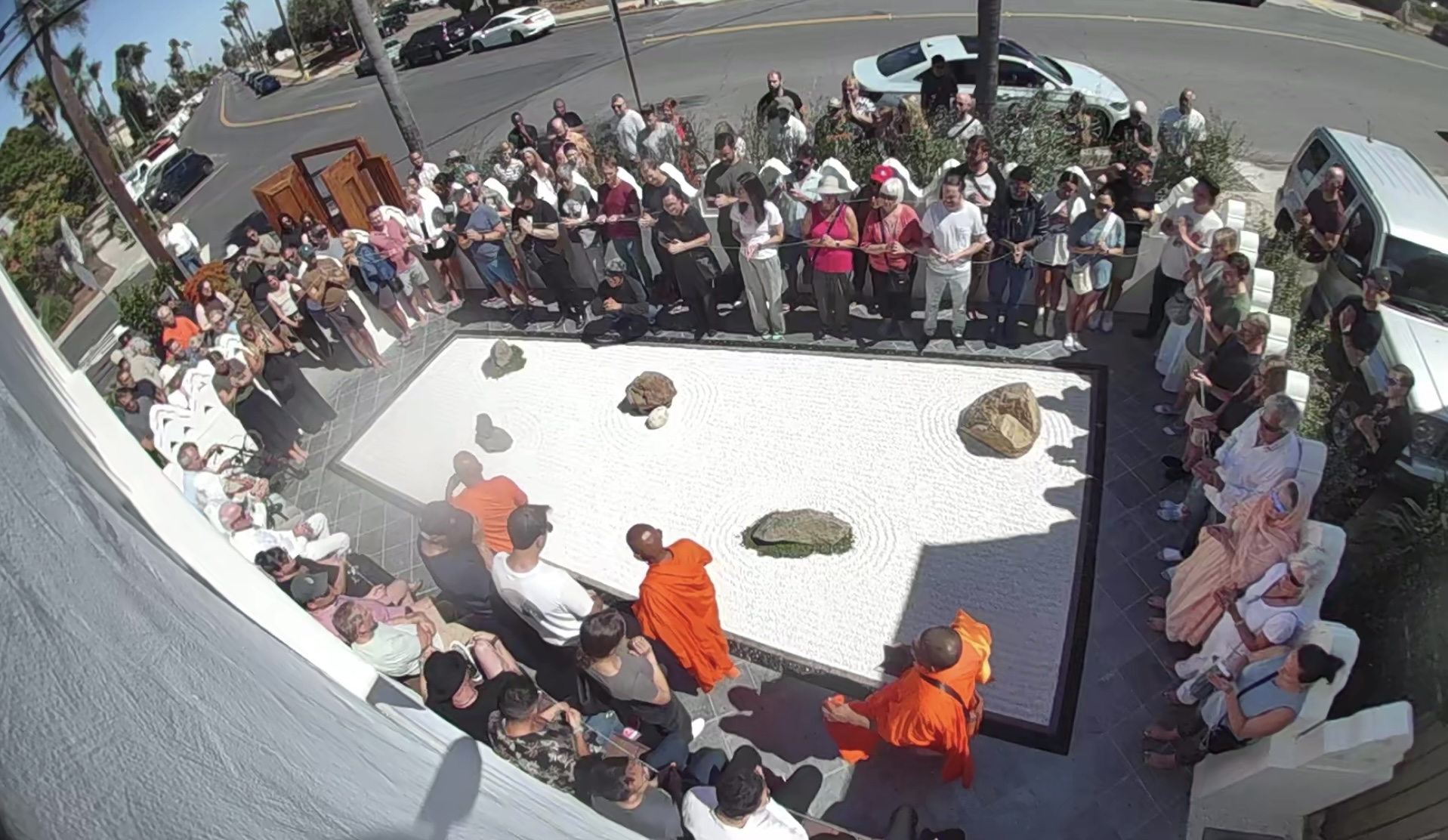
Click here to view photo album of the Zen Rock Garden Blessing Ceremony