I’ve been in the Engaged Buddhist Training Program for two weeks now, and something is already shifting in me—something I can’t quite name yet.
Before it started, I fabricated some silly stories about what everyone else in the program would be like. I wasn’t entirely sure I’d make deep connections there. I moved to San Diego recently and don’t know many people yet. I had been coming to the Sunday Sangha on the Heart Sutra, so I knew Jeff a little bit, but that was about it. Mostly, I was looking for structure—a way to build healthier habits and let go of the ones that weren’t serving me. I didn’t know exactly what I was stepping into, but I knew I wanted to be more engaged in my practice, in my community, in my own life.
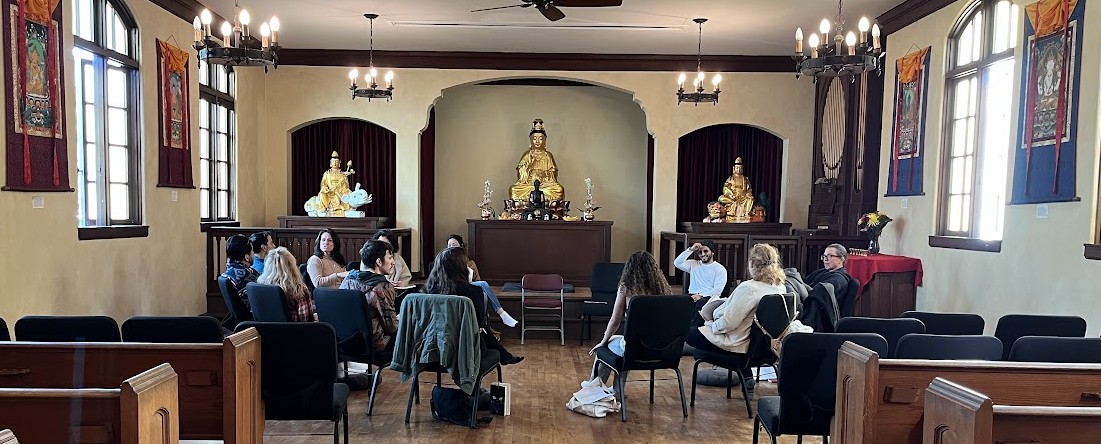
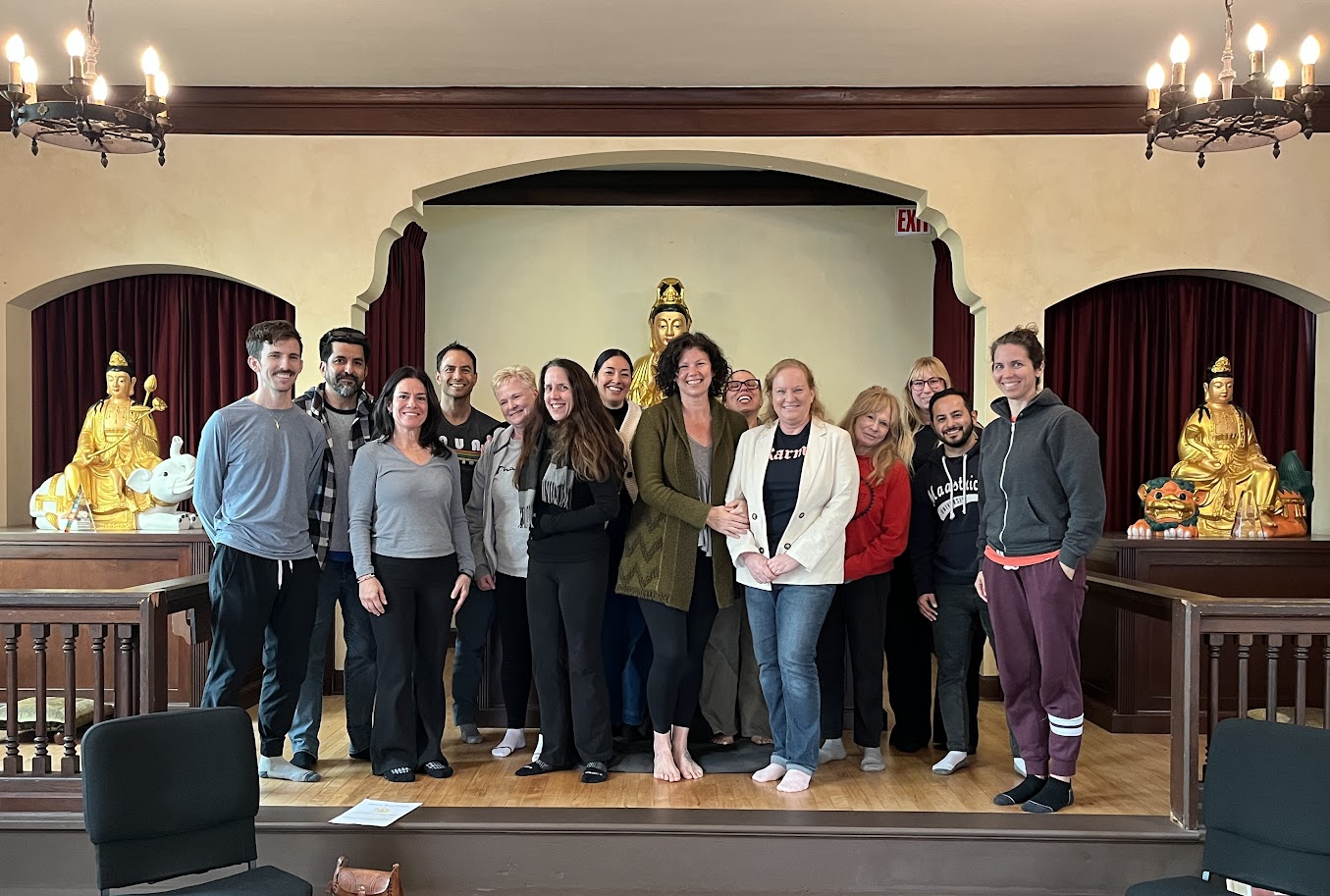
But the room was full of vulnerable, diverse, caring people. Strangers, but only for a moment. From the start, we were assigned meditation accountability partners. My meditation buddy and I now text each other every day to share how our sit went. It’s such a small thing, but it makes the practice feel more integrated into daily life, more shared.
The service requirement has been one of the most grounding aspects so far, helping me apply Buddhist principles to a lived practice. As part of this, I’ve been working to establish an ongoing service engagement between Dharma Bum and The Center, SD—San Diego’s LGBTQ+ Community Center. It’ll take a couple weeks to complete the necessary training and orientation, but in the meantime, I joined Dharma Bum’s weekly PATH volunteer group.
With PATH, I spent an evening cooking, preparing, and serving food to unhoused residents of San Diego. I focused on each task—cutting pineapples, cleaning surfaces, peeling potatoes, laughing with other volunteers about peeling potatoes, plating food, and then finally handing it over with a moment of connection. The act itself was simple, but there was something in the quiet rhythm of it—working alongside others, making sure everyone was fed—that felt deeply human. I wasn’t thinking about generosity or selflessness or any Buddhist lesson in the moment. I was just there, doing what needed to be done, and that was enough.
No one left hungry. Many got seconds, some even thirds. There was no fixed “giver” or “receiver” in that space. The labels blurred. Each person eating was also offering me something—an opportunity to show up, to practice, to recognize that none of us exist separately from each other.
In our group meetings so far, we’ve covered the Eightfold Path, the Six Paramitas, the Five Precepts, and a bit of Buddhist history in the U.S. and in San Diego. Many of these are teachings I’ve read about for years. But engaging with them in this way—through action, through discussion, through commitment—makes them feel different. Less like theory, more like something to be lived.
Surprisingly, after nearly 15 years of calling myself a Buddhist, I hadn’t really sat with those questions before. What does a Buddhist practice actually look like in my life? What does it feel like to live this way?
This program is showing me how to embody the Bodhisattva path—not just as a nice story, but as a very real way of being. A way of living my life. My actual life.
Tré